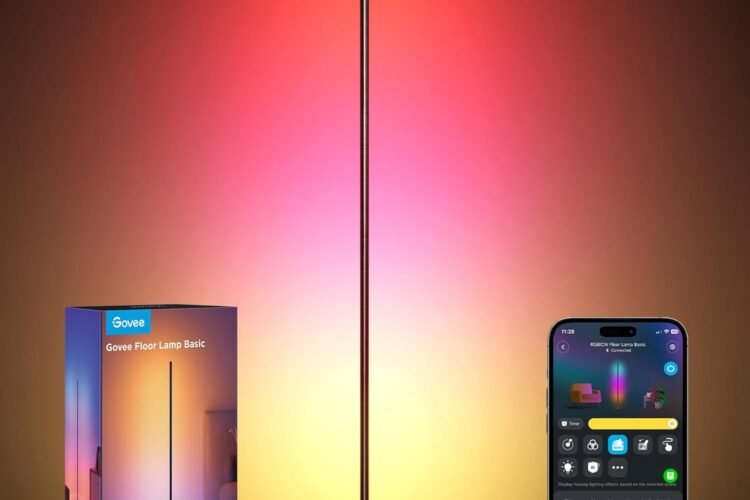
Lighting plays a foundational role in shaping how we experience interiors. It affects how spaces look, how colors are perceived, and even how people feel. Over the last decade, lighting has evolved from static fixtures into dynamic, interactive elements of home design. Among the innovations in this space are smart LED lighting products that blend technology, aesthetics, and user control.
One such product in this evolving category is the Govee RGBIC Floor Lamp Basic — a tall LED floor lamp designed for indoor use in living rooms, bedrooms, entertainment areas, and other spaces where ambient lighting is valued. This article explores the features, underlying technologies, compatibility with smart ecosystems, use cases, and practical considerations related to this lamp. The goal is to help readers understand what this type of smart lighting offers and how it fits into the broader landscape of connected home devices.
1. What Defines Smart Lighting Today?
Before diving into the specifics of the Govee lamp, it is useful to consider what “smart lighting” means.
From Static to Smart
Traditional lamps and ceiling fixtures are often controlled by a physical switch — an on/off mechanism with perhaps a dimmer knob. Smart lighting adds layers of flexibility and interactivity:
- Wireless control through apps
- Voice interaction with digital assistants
- Automation through schedules and triggers
- Integration with other smart devices
These capabilities transform lighting from a static utility into a customizable system that can respond to needs, moods, and routines.
Core Components of Smart Lighting
Key features that typically characterize modern smart lighting include:
- Remote control: Use of a smartphone or tablet to change lighting settings from anywhere
- Voice interaction: Control through digital voice assistants like Alexa or Google Assistant
- Networking: Connection to home Wi‑Fi or smart hubs for automation and synchronization
- Color and effects: Ability to adjust not just brightness, but color and dynamic behaviors
The Govee RGBIC Floor Lamp Basic is part of this wave — integrating connectivity with advanced lighting capabilities.
2. Introducing the Lamp — Form and Function
Physical Design
The lamp is designed as a vertical standing fixture, typically positioned in a corner or along a wall. Its tall profile and slim build help it blend into living spaces without dominating the visual field.
In essence, the structure supports a vertical LED strip covered with a diffuser material. This diffuser softens and distributes light across the room.
Light Output
The lamp is rated at approximately 1000 lumens, a measure of total luminous flux. In practical terms:
- This brightness level is suitable for ambient lighting
- It is comparable to multiple standard household bulbs in combined output
- It contributes to environment illumination rather than focused task lighting
Because it sits between accent lighting and full room illumination, the lamp often compliments rather than replaces other light sources.
Color Capabilities
A defining feature of this lamp is its support for up to 16 million color options. This range is made possible through RGBIC technology, which is covered in the next section.
3. Understanding RGBIC Technology
RGBIC stands for Red, Green, Blue with Independent Color control. This technology differs from standard RGB lighting by allowing multiple colors to be displayed simultaneously along the same light strip.
Traditional RGB vs. RGBIC
In traditional RGB lighting:
- One color is chosen at a time
- All LEDs display that single color uniformly
With RGBIC:
- Different segments of the LED strip can show different colors at the same time
- This enables effects such as gradients, multi‑colored waves, and dynamic transitions
This multi‑color capability broadens creative lighting options beyond static color selection.
Practical Effects Enabled by RGBIC
With RGBIC, users can create:
- Multi‑color ambiance: Smooth transitions between colors across the height of the lamp
- Dynamic scenes: Lighting effects that simulate movement or progression
- Custom color patterns: Tailored combinations that reflect mood or décor
These effects work well in environments where atmosphere and mood lighting matter — such as living rooms during gatherings or bedrooms for relaxation.
4. Smart Connectivity: How the Lamp Interfaces with Home Systems
A key distinction for modern lighting products is how they connect to broader smart ecosystems. The Govee RGBIC Floor Lamp Basic supports multiple connectivity paradigms.
Wi‑Fi Connectivity
The lamp typically operates on a 2.4 GHz Wi‑Fi network. This connection enables:
- Control via mobile apps
- Synchronization with other smart devices
- Remote interaction within the home network
Using Wi‑Fi is common among smart lighting products because it extends control beyond physical proximity.
Bluetooth Support
In addition to Wi‑Fi, the lamp may support Bluetooth. Bluetooth connection enables:
- Direct control from a phone when near the device
- Simplified initial setup before network configuration
Bluetooth acts as a convenient bridge toward full network‑based control.
Voice Control Through Assistants
The lamp can integrate with several voice control platforms. When connected to compatible systems, it can respond to spoken commands such as:
- Turning on/off
- Changing brightness
- Switching colors
Major voice ecosystems supported include:
- Amazon Alexa
- Google Assistant
Voice control adds hands‑free interaction, particularly useful during routines or when approaching a room.
SmartThings and Matter Support
Beyond voice assistants, the lamp supports broader smart home frameworks:
- SmartThings: A platform that centralizes control of multiple connected devices
- Matter: An interoperability standard developed to unify smart device communication across brands
When a device supports Matter, it can participate in complex automation scenarios and interact with diverse products from multiple manufacturers.
These systems allow the lamp to be part of coordinated behaviors — turning on when a motion sensor detects activity, dimming at certain times, or joining lighting scenes with other devices.
5. App Control and Customization
The primary software interface for this lamp is typically a mobile app provided by the manufacturer. This app serves as a control hub for lighting behavior.
Core App Features
Within the app, users generally have access to:
- Color selection tools: Choose from millions of hues
- Brightness controls: Adjust light intensity
- Scene settings: Preset combinations of colors and behaviors
- DIY modes: Custom sequences and patterns
- Schedules: Automated on/off and transition times
The app interface often includes visual color wheels, sliders, and scene previews to help tailor lighting.
Scene Creation
One of the useful features in smart lighting apps is the ability to define scenes. These are combinations of color, brightness, and behavior designed to evoke a specific mood or environment.
Examples of scene types include:
- Soft warm tones for relaxation
- Vibrant cycles for social gatherings
- Cool ambient hues for focus or productivity
Scenes can be saved, named, and re‑used on demand.
Automation and Timers
Scheduled routines allow lighting changes to unfold without manual input. For instance:
- Lights gradually brighten in the morning
- They dim toward bedtime
- They alternate colors at specific times
Automation helps lighting align with daily rhythms.
6. Music Sync — Light That Reacts to Sound
An engaging aspect of this lamp is music synchronization. In music sync mode:
- A built‑in microphone detects audio in the surrounding space
- Lighting patterns adjust in real time to music beats and rhythm
This feature creates dynamic interplay between audio and lighting. Effects can include:
- Pulsing colors
- Flickering transitions
- Real‑time reactive patterns
Music sync is often used during social gatherings, media playback, or background audio sessions.
7. Practical Placement and Usage Scenarios
The versatility of this lamp allows it to be utilized in numerous room contexts.
Living Room Ambiance
In living rooms, ambient lighting helps:
- Soften contrast with direct overhead lights
- Provide background illumination during conversations
- Establish mood without glare
Positioning the lamp in a corner allows light to wash up walls and fill space subtly.
Bedroom Lighting
In bedrooms, lighting can influence:
- Relaxation
- Pre‑sleep ambiance
- Transitional lighting before bedtime
Soft color tones can help create a calm environment.
Media and Entertainment Spaces
When combined with music sync or scene lighting, the lamp can:
- Enhance gaming sessions
- Support movie atmosphere
- Provide ambient cues during playlists
Dynamic lighting complements sensory experiences.
Home Office and Focus Areas
In work spaces, indirect lighting can reduce strain by balancing contrast between screens and room light.
Color temperatures that lean cooler can help maintain alertness during focused tasks.
8. Brightness, Colors, and Light Quality
Understanding Lumens
Lumens measure perceived brightness:
- 1000 lumens is a moderate level suitable for ambient lighting
- It generally exceeds a single standard bulb but is lower than direct task lighting
Brightness alone does not define lighting usefulness; distribution and color quality are equally important.
Color Rendering and Temperature
Smart LED lamps often allow adjustments in color temperature (cool to warm). Temperature influences how colors are perceived:
- Cool white (bluish tones) can appear more vibrant and alert
- Warm white (yellowish tones) can feel cozy and relaxing
Support for a wide spectrum of hues enables adaptation to different activities and moods.
9. Integration with Broader Smart Home Ecosystems
Connected lighting can be part of multi‑device automation. Example scenarios include:
Routine Triggers
Lights could change based on:
- Time of day
- Motion detection
- Sunrise/sunset events
For instance, lighting may softly come on when motion is sensed at night or adjust automatically during morning hours.
Cross‑Device Coordination
When integrated with other smart devices, lighting can participate in thematic scenes. For example:
- Coordinating lights with blinds or speakers at specific times
- Engaging multi‑room lighting cues
These integrations create an orchestrated environment rather than isolated control.
10. Connectivity Setup and Network Considerations
Smart lamps like this one generally require:
- A 2.4 GHz Wi‑Fi network, as many smart devices do not support 5 GHz connections
- A smartphone or tablet for initial setup
- Installation of a companion app
Once connected, devices appear within a user’s account and can be managed remotely (within the home network).
Network stability and password‑protected Wi‑Fi help ensure consistent communication with the lamp.
11. User Interface Options
Users typically interact with the lamp via:
- Mobile app interface — for full control and customization
- Voice commands — through smart assistants
- Basic hardware button — for quick on/off or default mode
The hardware button provides fallback control when network connectivity is unavailable.
12. Safety, Power, and Installation Basics
Safety
Like other electric lighting products, safety considerations include:
- Avoiding exposure to moisture
- Ensuring stable placement
- Using appropriate power adapters
LED lamps generate less heat than traditional bulbs, but stable installation remains important.
Power
The lamp operates via a power adapter plugged into a standard outlet. Power consumption is typically modest due to the energy efficiency of LED technology.
Assembly
Freestanding lamps often require basic assembly (attaching poles or segments). This process does not usually require specialized tools.
13. Frequently Asked Questions (General Smart Lamp Queries)
Can multiple users control the lamp?
Depending on network and app settings, sharing access with family members can enable multiple controllers through shared app permissions.
What happens during connectivity loss?
Basic on/off control remains available via hardware buttons, while app or voice control may be limited without a network connection.
Does the lamp store custom settings?
Some devices allow scenes or patterns to be stored within the app; behavior may vary based on firmware and app capabilities.
Is it suitable for high‑brightness tasks?
As a moderate ambient light source, this lamp complements focused task lighting like desk lamps or overhead fixtures.
14. Lighting Concepts in Everyday Use
Understanding how light affects spaces helps users make the most of smart lamps.
Ambient Lighting
General illumination that fills a space without focusing on tasks.
Accent Lighting
Focused light that highlights features or creates visual interest.
Mood Lighting
Color and intensity designed to influence emotional response.
Smart lighting bridges these concepts by allowing adjustments over time and context.
15. Connecting Smart Lighting with Daily Life
Smart lighting is not just technology — it intersects with routines, mood, and environment:
- Morning routines: Soft light to ease into the day
- Evening calm: Warm hues to prepare for relaxation
- Social gatherings: Dynamic color environments
- Work comfort: Balanced lighting for extended focus
Understanding these behavioral connections helps users configure lighting that supports their lifestyle.
16. Final Reflections on Smart Ambient Lighting
Lighting is a fundamental element of interior design and daily life. The transition from static fixtures to programmable, connected lamps illustrates broader trends in home technology — blending utility with adaptability and interactive design. Smart floor lamps extend beyond illumination into expressive tools that shape mood, support routines, and interact with other devices in the connected home.
The Govee RGBIC Floor Lamp Basic embodies this evolution through its combination of dynamic color technology, smart ecosystem connectivity, music synchronization, and mobile control. Whether used as an ambient accent in a living room, a soft glow in a bedroom, or a responsive lighting source for entertainment spaces, this type of smart lamp reflects both technological progress and the increasing role of lighting in personalized environments.
In exploring products like this, understanding how features align with everyday use — rather than evaluating them as purchases — provides a meaningful perspective on how smart lighting innovations interact with contemporary living.